11.19.2011
my Schindler list
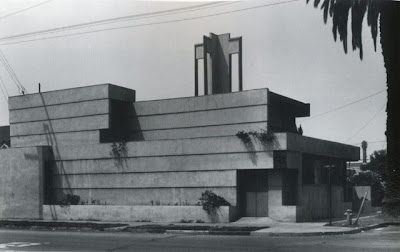
haiku for the book “Schindler” by David Gebhard

The book’s well written, although there is a smattering of misspellings and missing words—surprising given that this is the third edition. Sigh… (not that I should talk, but at least I’m an amateur…).
More photos coming soon…
11.15.2011
hiring an architect II

Having failed the first time in hiring a (ahem) competent architect, we’ve turned to what the American Institute of Architects has to say on the subject. And while this is like walking into a den of vampires to ask directions to the local plasma donation center, the advice seems solid. In short [with editorial adds]:
1. Define your needs and goals [and budget].
2. Develop a list of architects based on projects you like [that are within your goals and budget] and recommendations from others.
3. Contact the firms to see if they are available and interested in your project [at your budget; I’ve found that they will ask if you don’t offer]; if they are, ask for promotional/informational materials [this seems old skool in this age of the interwebs; I checked out web pages and googled for third-party articles/comments].
4. Reduce your list to two to three top candidates.
5. Interview and [hopefully] select!
One of the things you are assessing at the interview is the chemistry. For example, if you are screaming at each other within 15 minutes of meeting, you may not be a good fit… Does the architect listen to what you have to say? How does the architect respond to your comments and design preferences? Does he offer you delicious cookies? I’d suggest meeting at the architect’s office so you can see where the magic happens and, perhaps, meet other people that may be involved in your project. You also need to remember that the architect is also interviewing you to decide whether or not to take you on as a client. He wants to see if you have realistic expectations, if your design preferences are compatible with his, and whether or not you talk with your mouth full while eating his delicious cookies. For a humorous take on interviewing clients from a real live architect, check out this post at the most excellent blog Life of an Architect (perhaps we need to stop talking about wanting a catio…).
Questions the AIA suggests you ask potential architects includes:
1. When would you be able to start on the project?
2. Who will work on the project [If it’s a large firm, the “big guy” may be the one that woos and then delegates the project to someone else in the office; you want to make sure you get along with whomever has the lead on the project.]
3. What is your design philosophy? [If he only wants to build yurts and you don’t want a yurt, you might reconsider the architect (or not wanting a yurt).]
4. What is your design approach? [How and when are you involved in the process, how is budget considered during the process, what are the deliverables, how long does this whole mess take.]
5. What are your fees?
After you’ve winnowed down the list to one, you may want to ask for references/former customers and talk to them. As a pseudo-introvert, I’m not real keen on calling folks up to yap with them about the architect. Besides, the architect is going to give you the ones that love him (unless he’s totally clueless…), so I’m not sure what you learn. You could also ask for a list of the architect’s last three clients. But again, unless he is a rabid blogger, how do you know that he hasn’t skipped over a few folks? (For example, something tells me we’re not going to be getting calls from potential clients of The Architect).
For more info:
How to Hire an Architect (eHow)
How to Hire the Right Architect for Your Job
11.09.2011
haiku for the book "Think like an architect" by Hal Box

machines for living
and god is in the details.
form follows function…
Bought this book as a consolation prize after a small hike to BookPeople in (a failed) search of a tome on Richard Meier’s houses. Written by a long-time UT architecture dean and published by UT Press, it’s truly a gem. Covering the totality of architecture, from its history to its practice, this book gives a great overview of it all with a lot of practical pointers. The book is somewhat autobiographical and includes Box’s views and opinions on this and that. It’s organized as a series of hypothetical letters, which is a little cheesy and unnecessary (and almost caused me not to buy it). But after the initial Dear Johns and Dear Janes that start the chapters, the goofiness fades quickly.
Box’s professorial pedigree shines in how he organizes the essence of his message in well-worded and thoroughly-explained lists. The writing is clear and concise and slides across the palate like a fine wine (or a cold glass of Dublin Dr Pepper). Although Box is a professor, he started out as a practicing architect (and practiced while proffing) and keeps his feet solidly on a practical foundation. In fact, he states that the primary job of the architect is to “…satisfy the client’s program within the budget in a timely manner.” Amen, brother! He goes on to say “[t]he budget is a prime reality of the project. It is value. When your project is finished, no matter how good the architecture, it will be only real estate to much of the world.” And furthermore: “You begin the design process by exploring three worlds that are about to meet: One world is the site, a place in the community or landscape; another world is the program, the owner’s list of needs and desires; and the third world is the budget.” It’s good to know that some architects actually take budget (and the owner’s needs and desires) into consideration with their work…
For the most part, Box keeps his architectural ego in place, indirectly noting (by omission) that he is not one of the geniuses. However, the arch-ego slips out for a little sunshine and mooning when he writes that “…architecture is the most comprehensive of all visual arts and has a right to claim a superiority over the others.” Take that, Ansel Adams…
The chapters of most interest to me were those on the design process and making design decisions, chapters I’ve already read a few times (and will surely read a few times more). Box notes that these chapters are his ideas and thoughts on the design process; nonetheless, it’s neat to get an inside view into the architectural magic.
Box is not a fan of undiluted modernism (pointing out that it’s been around for over a hundred years now) and instead trumpets regionalism that fits in with the neighborhood, local climate, and local materials. He shudders at architectural interventions, where the architecture stands out from the crowd like Lady Gaga at a Catholic sisters retreat in Abilene (Gehry is a gaga interventionist, I reckon…). My inner punkrocker doesn’t agree with this, but I understand the motivation and concern.
Finally, Box provides a substantial reading list to learn more about the history and process of architecture. All in all a worthy book for anyone thinking about becoming an architect, looking to hire an architect, or simply wants to know more about the built world about us.
11.06.2011
onward through the fog…

Well, it's been a somewhat busy week on the homefront. We interviewed a potential new architect, spoke to a couple of the builders, chose a builder, and heard from The Architect. Where to begin...
(1) A new architect?
We flirted with a new potential architect (Let’s call him Mr. Yard Dog). This fellow was our #2 behind The Architect when we started this whole adventure. He had ably architected and built a cool affordable modern for a friend of ours who heartily recommended him. We met him at an art opening “back in the day”, and he was quite pleasant.
When I contacted him last week, he had just closed up his shop and joined another one. I went to visit him and the head of the new shop with the end result that the firm he joined is WAY out of our league. After 90 minutes of describing what we were after and whatnot and the standard give and take, the bossman identified their niche as the $280 to $330 a square foot market. That’s fine, but that’s a little (actually a lot…) too rich for us (and a little embarrassing [and heartbreaking] after yapping about our project for 1.5 hours). Next...
One thing we learned talking to them was that design-build makes more sense for a high-end detailed house where the architect needs to be on-site to make sure it gets done right, something we are not in the market for. Not to mention that it seems like a lot of the design-build firms are either (a) out of business or (b) (consistent with what the bossman said) high-end. The other thing we learned, and it’s quite an obvious one, is that if they don’t show what you’re looking to do on their website, they don’t do it. I’ve had some folks suggest that, given the soft market, we shouldn’t delist an architect that does high-end stuff. I disagree. They do what they do. You can’t teach an old dog old tricks…
(2) Builder post-audit
After sending out a note to the builders about our inability to afford the house The Architect designed (and the termination of our relationship with said architect), two builders asked to visit with us. They both expressed surprise at some of the material choices “we” had made. One surprising choice was the cladding for the sandcrawler. I envisioned standing seam roofing material: metallic, cool looking, inexpensive. The Architect had the builders pricing custom metal shingles: metallic, cool looking, expensive. Very expensive. Like you-either-get-this-siding-or-you-get-a-garage expensive. The builders thought this was a bizarre choice for us to make. Except we didn’t make it. The Architect did. While he was pressing us (yet again) to get rid of the garage, he was cladding (a small) part of the house with the proceeds. Another expensive part of the house not exactly shared with us was the cost of the entries. He had a $9,000 back door and a $7,000 front door. Was this discussed with us as a potential costsaver? Nope. But that troublesome garage sure was. As the missus says these days, The Architect was working more for the photo in his portfolio than for us.
(3) In talking to the two builders, we decided on one.
Given that we weren’t finding a whole lotta choices in the design-build realm at our price-point, we knew the other option was to choose a builder up front and bring him to the design table. One of the builders we talked to had me stifling “Amen, brother!” after almost every sentence he said, not to mention that he has a long track record of building affordable modern. We know he can do it, and what he says about design choices makes a lot of sense. Therefore, we’re going to revisit our info sheet, get some surveys done, reassemble our precedents, and dive back into the dating pool with architects, this time with those recommended by the builder.
(4) The Architect sent us a note.
Not surprisingly he insisted that (a) everything was our fault (The Architect does no wrong.) and (b) he was not obligated to design a house that fit our budget. Wished we had known that going in. And if that was the case, we wish he hadn’t told us early on that a big part of his job was keeping us on budget. I guess he mistook us for folks that like to design houses for fun! Yippee! Especially infuriating was his claim that WE let costs get out of control. Huh? We were the ones begging him to design a project to fit our budget!
We’ve wondered what the heck we did wrong in hiring this guy. We thought that because he had architected several speculative projects that he would be attentive to costs. Furthermore, he had architected a project that, from all outward appearances, was in the budget and finish-out range we were looking for. One thing we didn’t consider is that the spec builders he worked for probably had good data on what it costs to build and could use their BS detectors early in the process to reel him in. In retrospect, our error was hiring an architect that didn’t have much (if any) experience working with future homeowners.
One of the builders gently suggested that this time we find an architect that we get along with. We seriously thought we had. After all, we worked with him in finding a lot, explored putting an addition onto our house with him, and hung out with him. It wasn’t until after we signed an agreement and started designing a house did things go south. And really, it wasn’t until then that we figured out he had a terrible design-killing handle on how much it costs to build as well as a lousy philosophy on damage control (pretend nothing bad’s happened and, if the client notices something bad’s happened and then asks about it, blame the client).
Live and learn…
[photo by mwah; intramural fields]