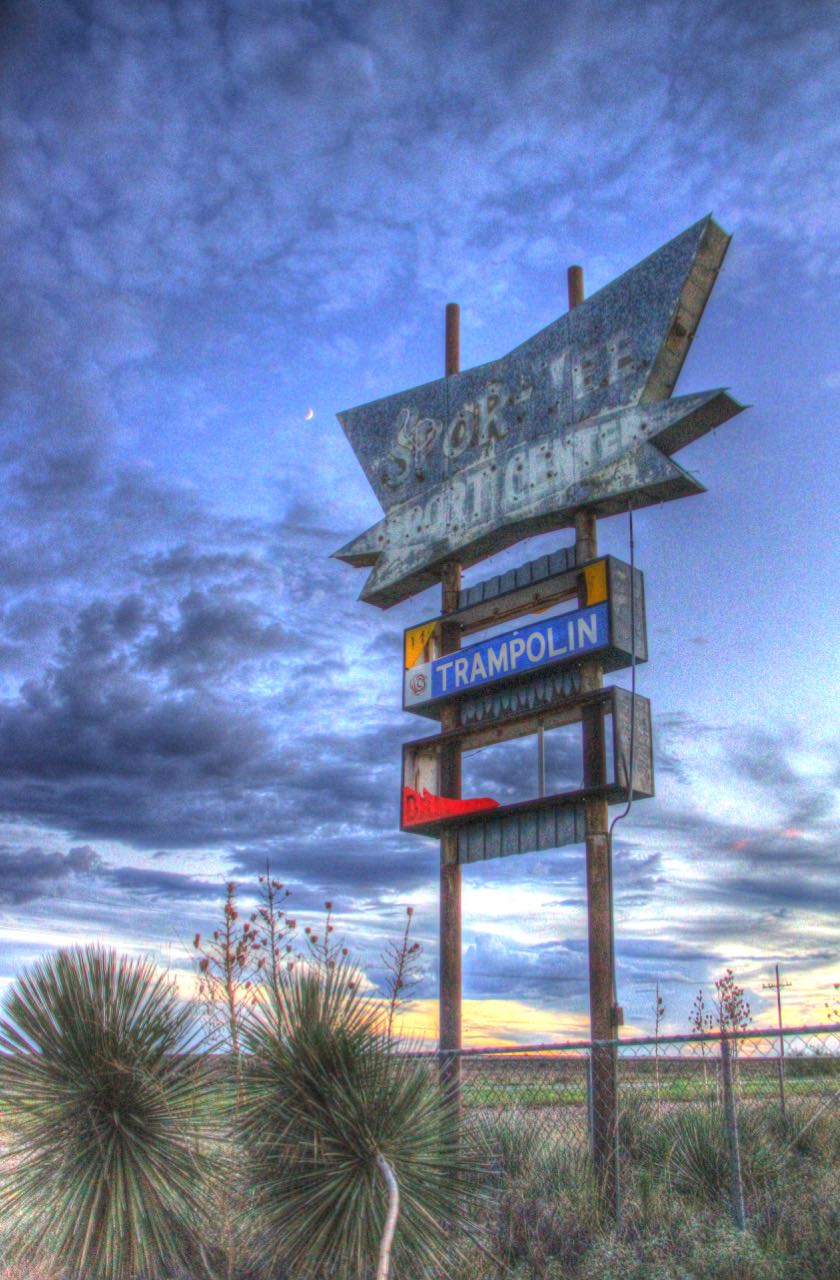
I had the pleasure of visiting Manhattan, Kansas, last week (water-water-water...) and was able to walk about the city a couple nights and before heading back to the airport. Some quick factoids about Manhattan:
- About 56,000 people live there (not including the 26,000 students at Kansas State University)
- Nicknamed “The Little Apple”
- The college-oriented businesses near campus are known as Aggieville (The university is the agricultural school of the state).
- Birthplace of Damon Runyun, the “Inventor of Broadway” (Guys and Dolls is based on one of his stories.
- Birthplace of the dude that introduced bamboo, pistachios, and soybeans to the U.S. (thank you Dr. Invasives...).
- Birthplace of Elvira, Mistress of the Night.
- The American Institute of Baking is located in Manhattan.
- It was once against the law to serve ice cream on top of cherry pie in Kansas [don't be messing with my cherry pie].
Manhattan is located amidst the Flint Hills, Permian limestones with [you guessed it] a lot of flint in 'em. Not surprisingly, most of the local architecture is composed of or clad in limestone from the hills.
There's not a whole lot going on architecturally in town, which is not surprising given its size and agricultural (read: conservative) history. However, there are a few interesting buildings. The new airport is rather nice (despite its "fruit stand" baggage claim shown above) with its use of local limestone and even louvres on the windows evoking the broken up layers of the local geology:


I hit downtown one evening to see the sites:

County courthouse.

A nice streamline moderne business front.

Nice abandoned streamline moderne structure.

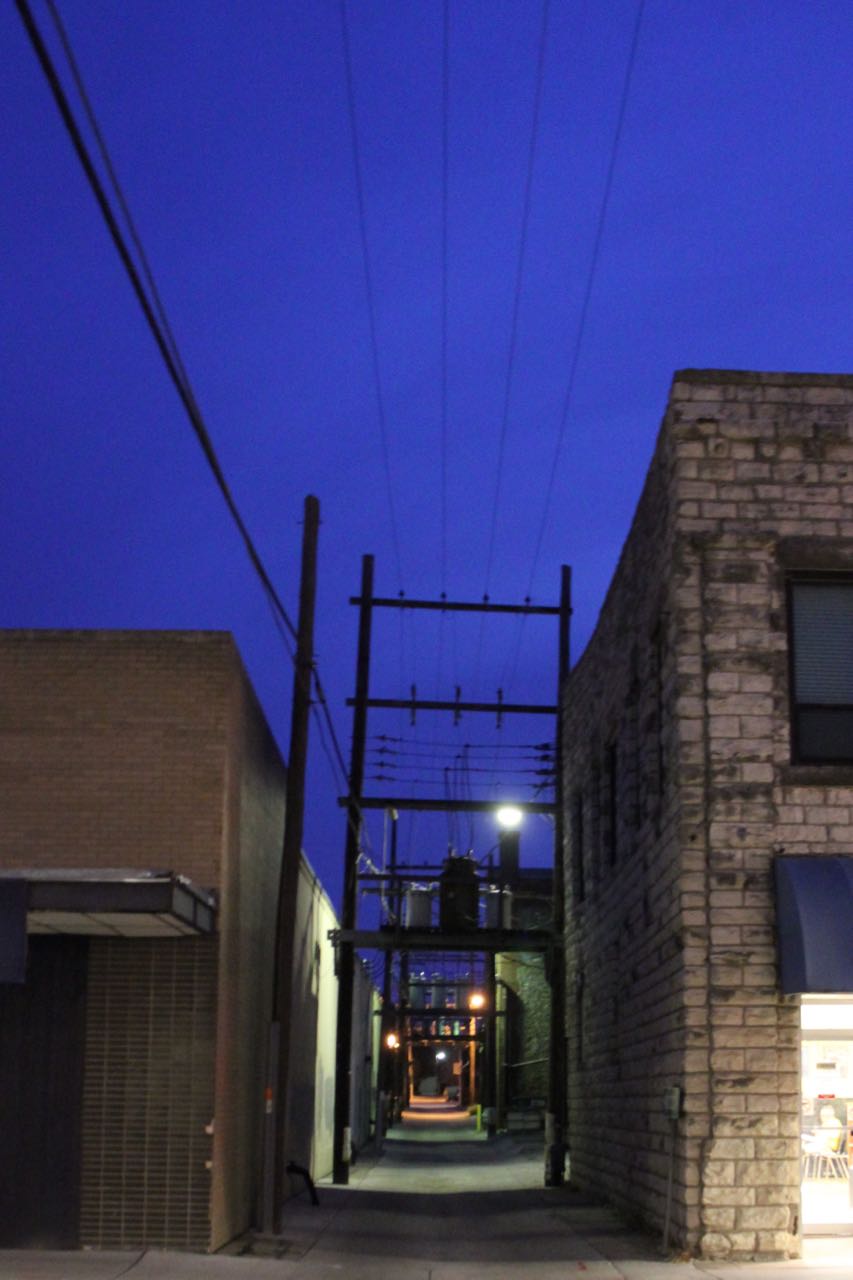

Modding it up in the front office...
The Flint Hills Discovery Center is architecturally inspired, again evoking the local geology with the limestone and broken beds of the Flint Hills:


Nearby is a nice park with a large statue that brings to mind a cross between Paul Bunyan and the Grim Reaper...

Line flushing.


The architecture at the university is focused on the local limestone with nearly every building sporting it in some shape or form. The newer construction reaches backward as far as architectural style goes, although new construction on the edge of campus is more edgy.
The campus art museum is an architectural mess, probably shackled by the benefactor's wishes. Bits at the back were interesting in that they were somewhat modernized interpretations of traditional farmhouses (the pale green window panes against the concrete and limestone are a real nice touch). The main entrance is atrocious: I didn't take photo because I kept vomiting into the back of my mouth. I've added a photo I found at the end here for you to develop your own opinion....


I'm not feeling well: where's the barf bag? "Is this where you check into the Super 8?"


There's a fair amount of Art Deco on campus fused with the local limestone.


Built in 1996...


Before heading back to the airport, I made a 15 minute stop to the campus gardens and insect zoo. Yippee!


Bee hive where the bees come and go through that tube.

I hope this was on purpose...