1.20.2016

modern maven: Irving Gill


Part Gill in a multi-part series!

Who: Irving Gill 
What: Protomodernist architect of early Californian minimalism
When: b. 1870 d. 1936; key active time 1907-1919
Where: San Diego and Los Angeles
Why: Designed buildings of simple beauty inside and out inspired by Mediterranean architecture
Way: Worked under Louis Sullivan (and with Frank Lloyd Wright in Sullivan's office); was an influence on R.M. Schindler. Lloyd Wright worked for Gill for a time.

Gill began his career under Louis Sullivan working alongside Frank Lloyd Wright in Chicago. Due to health reasons, Gill moved to San Diego and started a practice that ably designed projects that aped the popular styles of the time. The combination of restoring the San Diego Mission and hooking up professionally with Frank Mead, a young architect who had just returned from photographing the simple whitewashed cubic huts that huddled against the sides of the Mediterranean sea, led to Gill's golden era between 1907 and 1919.

Gill removed nearly all ornamentation and greatly smoothed and simplified his architecture. His work still evoked Mission Revival with its arches, especially on homes and churches. The buildings he designed for Scripps looked like full-steam ahead Modernism: simple, devoid of ornamentation, and white. One of the great losses to American Modern architecture was the loss of Gill's Dodge House (1914-16) in West Hollywood in 1970. 

Gill was attentive to simplifying interiors as well as exterior. On interiors, he worked to minimize places where dust could collect by removing trim as much as possible and curving corners where walls and floors met. His houses during his key active time were light and airy.

Due to east coast architectural snobbery, Irving Gill's career was roundly ignored by the cognoscenti at the time. Today's historians recognize Gill's influence on early California Modernism and how the simplicity and utility he explored in his buildings approached if not surpassed that of Adolf Loos

Dodge House, West Hollywood (1914-6)


1.17.2016

dancing with architecture: south congress, austin, texas


When we first moved to Austin back in the earliest of the early nineties, South Congress is where you came for prostitutes and hourly motels. Now it's the most happening street in town with boutique shops, comfy (and overnight...) hotels, high-end (and low end) food, and a great slice of Austin life, embracing one of the best views of the state capitol in town.

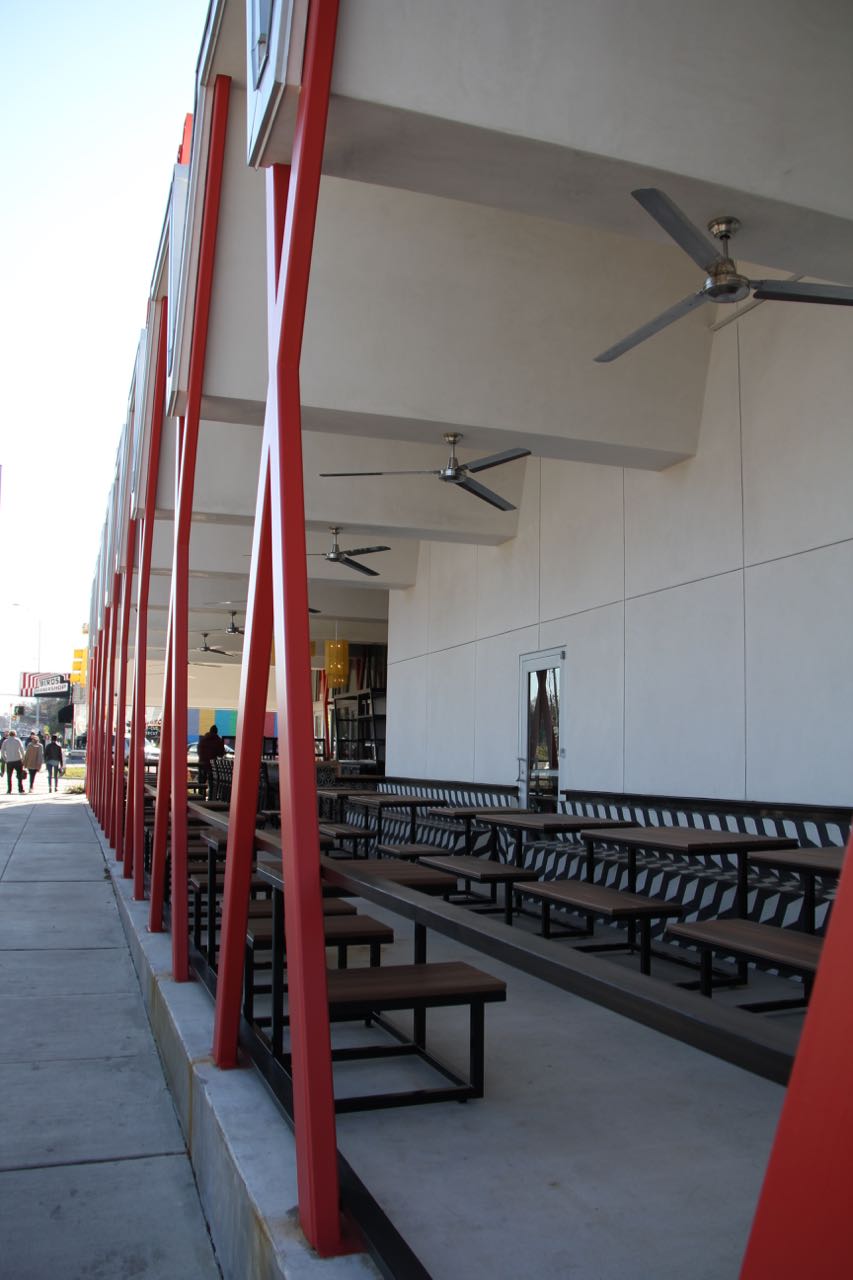
We went down to check out the new hotel on South Congress called (ahem) South Congress Hotel. Designed by Michael Hsu Office of Architecture, Dick Clark and Associates, and Studio MAI, the building is, at first view from across the street, underwhelming. It appears to be a repurposed low-rise office building from the 1960s (and who knows: that may have been the intent). The materials feel a bit forced and too eclectic, sandwiched between and glommed onto seemingly repurposed planes of concrete slabs. This is not grab-you-by-the-lapels-and-shake-you-silly architecture as you drive by. This is quiet architecture. This is architecture trying to fit in.  


Where the building excels is how it embraces people, those walking by on the sidewalk and partaking in one of the restaurants on the ground floor (having not stayed there, we can't speak directly about the rooms, but they look delicious). We did stopped into Cafe No Se, a restaurant in the corner space of the top photo above, once last weekend and again this weekend (with mom-in-law in tow), and loved it. The vibe, the rustic Modern interior, and the food are fantastic. 

Buildings, like people, should ultimately be judged by what's on the inside rather than what's on the outside. If that's a legitimate statement, this mousey building has a heart of gold.


We also stopped in to take a peek at the delightfully Googie new flagship Torchy's Tacos. Designed by Chioco Design, the idea was to pay homage to Fran's Hamburgers, which used to occupy the site. This is a design that grabs you by your lapels and leaves a little bit of salsa on you. It's good to see Torchy's embrace architecture as spicy as their tacos. 


Finally, just some impressions walking around. This is not a comprehensive assessment of South Congress (it was dang cold out!), but a mere glimpse.


George Sturges House (1939) on the auction block


This is definitely a hyped-up price: "Pre-auction estimate: $2.5 to $3 Million Dollars" Nonetheless, this would've been a deal if we had landed the Powerball (we got six numbers; unfortunately, they were spread out over 10 draws...). Be interesting to see what the house goes for. Even at crazy California prices, 2.5 to 3 is high. What will the Wright upcharge on this be?


1.13.2016

after winning the $1.5 billion PowerBall lottery, this will be our second purchase...

Things, ummmm, didn't work out last week with Powerball. We got one of six numbers close, but not close enough to seal the deal. Fortunately, no one else won, so we get another chance tonight. Yippee!

The bride and I have been talking about our plans for the money: friends and family to take care of, donations to make, property to buy to help live the life of leisure we're sure we'd easily merge into. And so our second purchase would be this property on Catalina Island:


That, my friends, is the location of the greatest architectural tragedy of this century: the destruction of  Schindler's iconic Wolfe House, built in 1929. The loss of the house is heartbreaking, but what's unconsciable is how recently the property was razed: 2002. Two thousand and freakin' two!!! What is wrong with people?!?!?! 

So the plan is to buy this property, erase whatever's there, and rebuild the Schindler. We'd recruit Steve Wallet to help us out (and probably pay him well). 

Don't worry: We'll feed some hungry kids somewhere too. And save the whales. And the bees. But we will also right this architectural wrong.


1.10.2016

moderno (and other art shows)


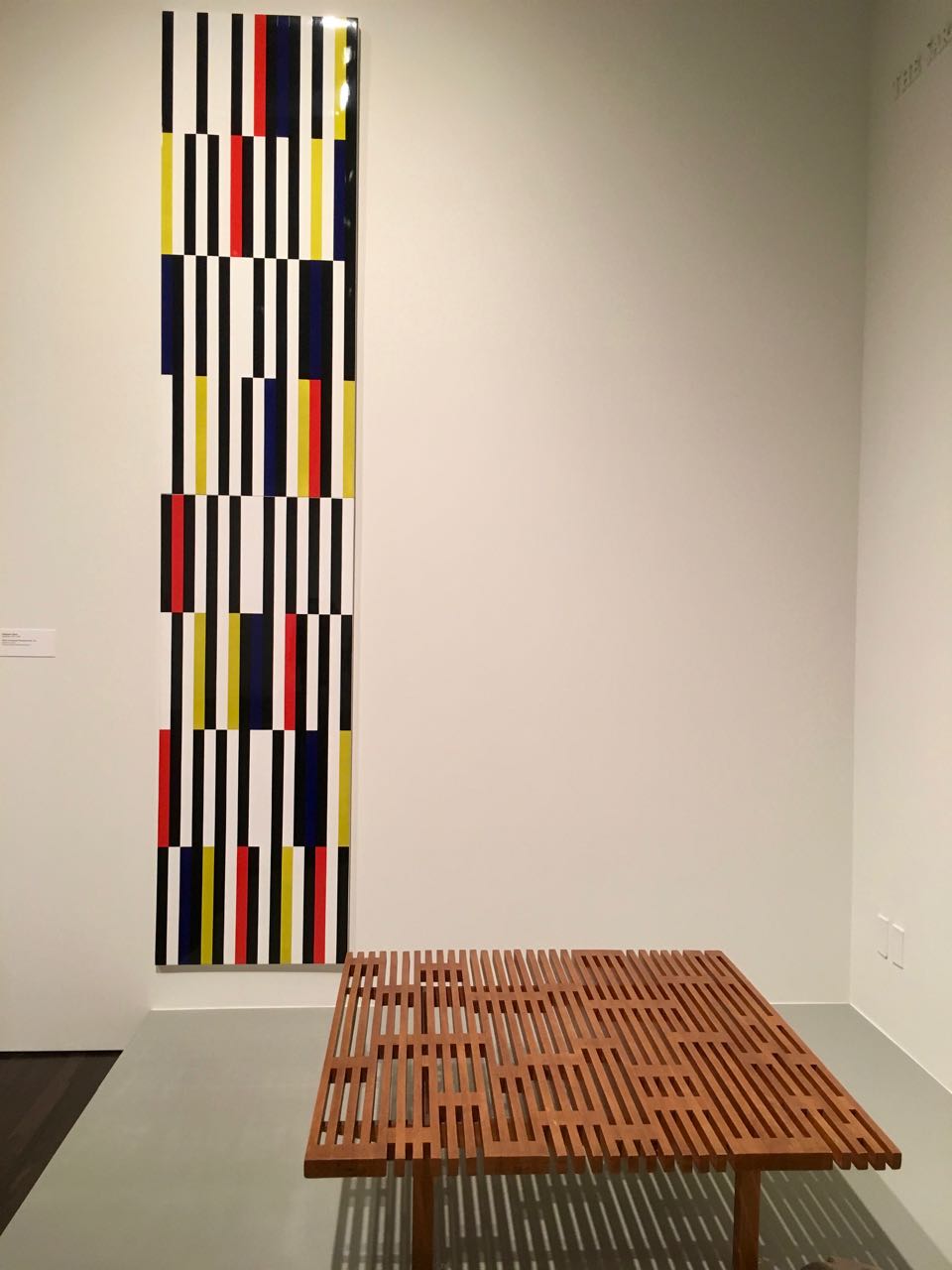
The Blanton Museum of Art here in Austin is hosting a show called Moderno focused on South American Modernism as expressed (primarily) through furniture design. The show is open until January 17th, so hurry if you want to see it! It's mostly Mid-Century Modernism, but worth a quick walk-through for the casual Modernist. The biggest thing I got out of the show was that Diego Rivera's and Frida Kahlo's Casa O'Gorman of 1929 was one of the first Modern houses in Latin America (because of their feisty relationship, the house is split in two [one for her, one for him] and connected by a bridge divvied with a door with locks on both sides). The house is gorgeous and is something that I definitely need to check out.

We also checked out the shows at the two Contemporary locations.

Clerestories in the main hall (all facing north [must have been a waterproofing nightmare]).

The main hall has an installation of wall tiles inspired by Donald Judd.


Mexican Modernism kept an element of Earthiness at close hand.


Here's Casa O'Gorman. On the bucket list.

Didn't realize that Domus came from south of the border.

This is a chair.

The tiles.


Off to the Contemporary!


Couldn't tell if this was art or a terrorist plot...


Just walking...


The contemporary at Laguna Gloria:


Love the mix of formal with Pop.