8.16.2015

washing windows


A great thing about living in a Modern house is all the windows and the natural light. A bad thing about living in a Modern house is all the windows and the cleaning. Fortunately, the good far outweighs the bad, but window cleaning can be quite a chore. One way of dealing with it is to hire folks to come clean the windows a few times a year. You can clean the windows yourself, but I nearly killed my shoulder the last time I did it myself. Nonetheless, here's a neat post via Houzz on tips from the pros on cleaning windows.

Some nifty "dirty" secrets from the article:

  • Avoid cleaning windows on hot and sunny days (hear! hear!).
  • Use warm water with a dash of dish soap.
  • To get streak-free windows, use dry towels.
  • Wipe windows dry in one direction outside and the other direction inside. That way, if you see a streak, you automatically know which side the streak is.

8.15.2015

getting networked


Time flies... Hard to believe we've been in the house for two years now. Two freakin' (fabulous) years! What's doubly surprising is the number of unfinished projects we have, such as setting up the computer network (or, more accurately, a Local Area Network, what the cool kids call a LAN). 

It's not that we've been without internet access. It's just that the single point wifi network has worked well enough to not push setting up the network to the top of the list (please don't confiscate my geek card...). Until now.

We are part of the Pecan Street Project in that they monitor our electric usage on a circuit-by-circuit basis. Their system connects with the internet at a single point at the router, but measurements made at the two distant electrical boxes push their data through the electrical circuits. Unfortunately, data from the box at the garage is not making it back to the home station. Therefore, the Pecaners want to access our wifi at the garage. Unfortunately, the wifi signal is not strong enough back there. I said "Hey! I have the house wired to put a wifi extender in the back master bedroom for the express purpose of getting wifi to the garage and backyard (and back master bedroom)! Lemme hook that up for you!".

And here we are...

Back when I wired the house for data and whatnot, I placed three boxes about the house with Cat5e for the express purpose of extending the wifi: (1) just outside the pantry, (2) one along the back wall of the master bedroom, and (3) one upstairs. I even bought one of the extenders to install outside the pantry back when we were building the house. However, I hadn't hooked it up (or any of the others) until now because the router from TimeWarner did a decent job of spewing the wifis over most of the property.

I have to confess that I've had my issues with this wiring project, but knowing what I know now, it would have been a piece of cake. And here's the key bit: trim all the little wires from the Cat5e wiring such that they are straight before crimping them into the Cat5e connectors. This is absolutely key!

As far as kit, here's what I needed for this project:

1. A network switch. Basically something that gives you more ports into your router (which either you have yourself or your internet provider has provided). It might throw you that there's no "in" port (it threw me for a bit...), but the box is smart in that you can connect your router into any of the ports and it knows what it is. This is the one we got for $25:

2. A Cat5e crimper with plugs: See top photo for what I got, all purchased at our local Lowe's. See here for how to use it.

3. A wifi extender: We went with Ubiquity's Unifi system because of (ahem) aesthetics, its power coming from the wiring (POE = power over ethernet), and (presumed) ease of  installation/configuration.


Setting up the Unifi required our desktop to be directly networked into the router instead of via wifi, so I set out to hook the desktop to the router via the in-wall Cat5e wiring. No luck. By all appearances, it looked like the wiring in the wall had somehow been compromised. I bought a 25-foot length of Cat5e to "lo-fi" connect the desktop to the router by running the wire along the floor through the kitchen (the bride was amused...). Two things I noticed: (1) holy crap is the internet connection better through a network connection than wifi (duh...) and (2) I was still failing at setting up the Unifi system. After moping for a couple days, it occurred to me that perhaps I wasn't crimping connectors correctly, and WALA!, after redoing the connectors by cutting the wires even, everything worked brilliantly!

I've now hooked up the Apple TV to the network (I have two Cat5e cables running to the entertainment center) and have plans to hook up more of the stuff we have to Cat5. 

So remember boys and girls: cut them wires even!

The Unifi installed.

The TimeWarner provided router on top with the switch directly below.

Don't judge... I have plans to clean this all up (two years from now...)

Cat3e

8.09.2015

dancing with architecture: the Salk Institute, La Jolla, California


I had been to the Salk Institute before, but the bride had not, so we stopped in to check out Louis Kahn's masterpiece in scientific architecture. It also gave me an opportunity to try out some HDR on the place. She dug it. I did too.


8.08.2015

dancing with architecture: Wilmington, North Carolina


So many travels, so little time to post... I am WAY late on posting photos and thoughts from various trips I have been on recently (and tend to favor posting the most recent trip, such as this one:): WILMINGTON!

The bride's company has a retreat every July. Because the bulk of the employees are on the east coast, they favor east coast locations for these retreats. And because the company is not ginormous (with ginormous budgets), they tend to favor quaint backwater eastern seaboard towns. These are not places we would normally seek to explore, but they are a hoot to explore nonetheless. This world is filled with interesting places.

Our sightseeing seems to gel about several themes: farmers' markets, food (and drink...), cemeteries, water (often a boat ride), art, graffiti, botanical gardens, and, of course, architecture, preferably modern. And this trip was no different.

Wilmington, originally established in 1732 under a different name (New Carthage and New Liverpool), is a port city with a wee bit more than 100,000 souls situated along the Cape Fear River. The downtown is southern-port-city quaint and livens up nicely on the weekends with a solid collection of clubs, bars, and restaurants. It's also only 30 minutes or so from gorgeous Atlantic beaches.

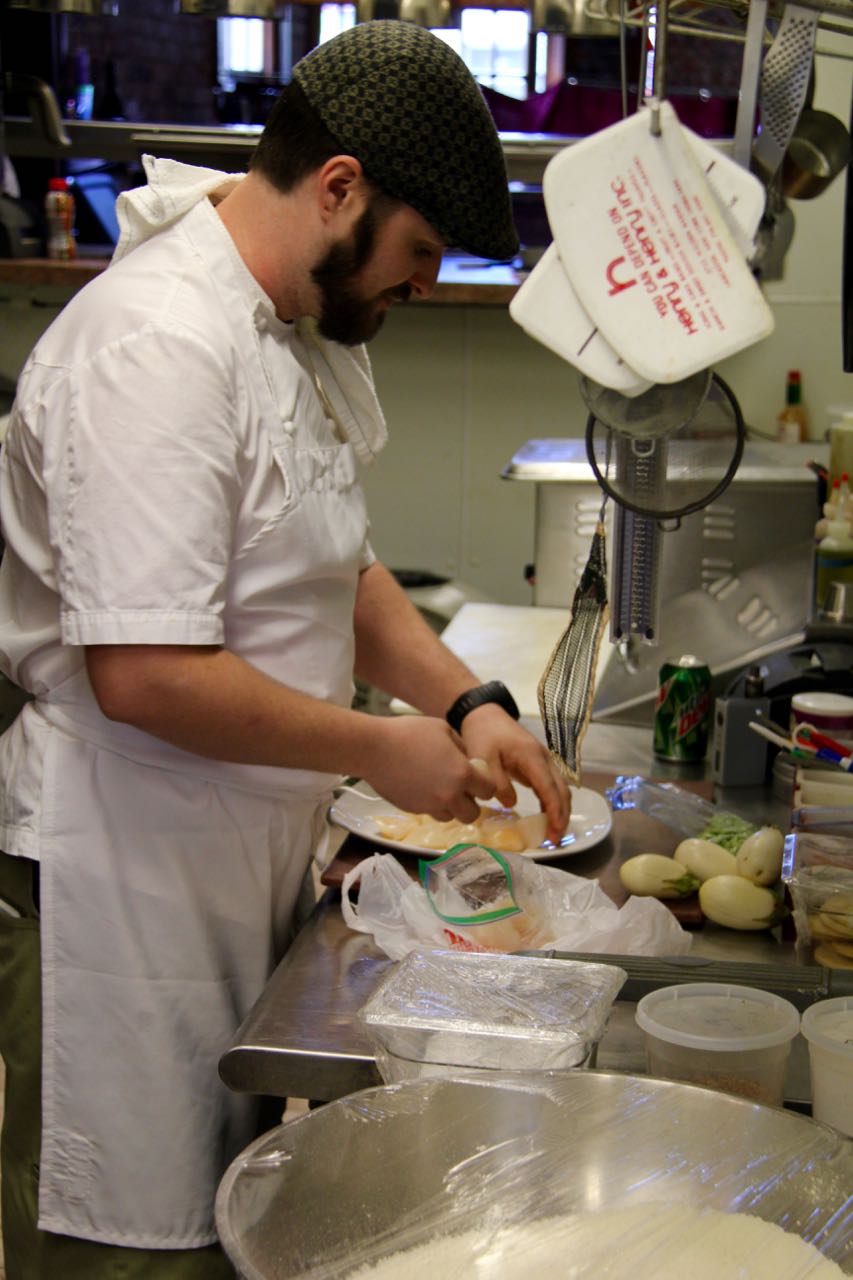
We went on a food tour for the first time (Taste Carolina) and thoroughly enjoyed it, mostly because we, along with another couple, got to pick out ingredients at the farmer's market and then spend an hour with a chef as he fixed it up and described what he was doing and why. Fantastic!

River water stained by tannins from cypress forests


A modernish house I saw.

Un otro.


Before the Civil War, several of the nearby river islands were used, via slave labor, to grow rice, which was a major cash crop in North Carolina at the time. The photo above shows a canal that was dug to bring water to the fields. The dead trees (ghost trees) were victims of dredging the river, which caused seawater to move upriver. 


In the olden days, when your boat was giving up the ghost, you just parked it along the shore opposite the city. Said shore was littered with the last remaining remnants of the steam boiler hearts of these boats.


Oysters in the bay.


Detail from the church below showing the clapboards with at least a hundred years of paint on them.


Cupcakes from the Peppered Cupcake, who sells (ahem) peppered cupcakes.


Chef Tyson of Aubriana's fixed up our ingredients for lunch (scallops, eggplant, and butterbeans) while sharing many trade secrets of chef'ing up food. This was the hi-lite of the trip. 


The cemetery has a gravestone for a volunteer fireman and his dog. The fireman died during a fire. The dog died trying to save him. 


This lady (nickname Nance) died during a voyage through the Caribbean. The ship's crew preserved her in a vat of rum until she could be brought back home. 


This was an interesting architectural detail. It caught my eye because of the blockiness. The large tan blocks are made of sandstone. To make them fit in better with the brick construction, the builder/architect had the sandstone etched such that it looked like brick. Lo-fi-ing a more hi-fi material...